Understanding the Rise of Generative AI: How It’s Redefining Digital Creation
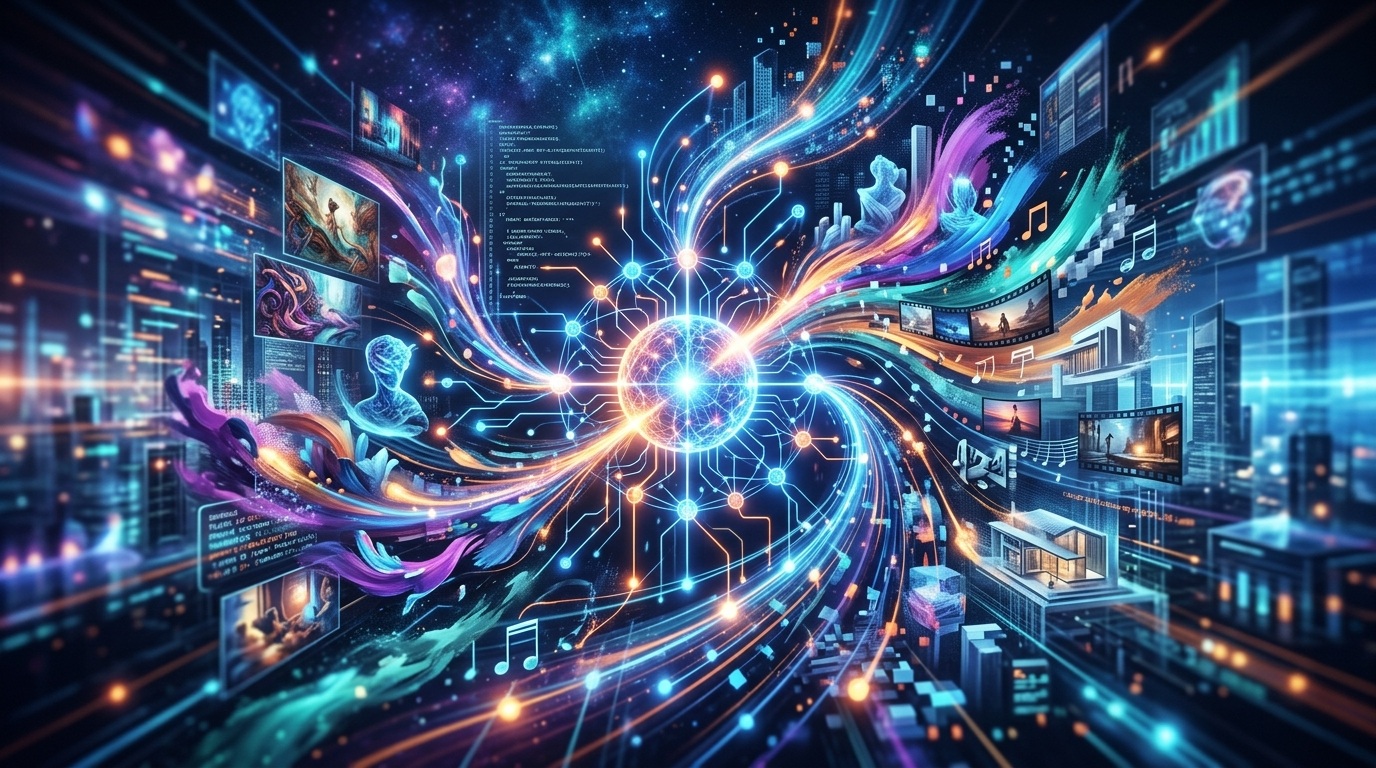
In this comprehensive guide, we will delve deep into the world of Generative AI, exploring precisely what it is, how it works, its rapid ascent, and the myriad ways it is reshaping industries worldwide. If you’re looking for a thorough understanding of this groundbreaking technology, consider this your essential resource for Generative AI Explained.
What is Generative AI? A Core Concept of Generative AI Explained
At its heart, Generative AI refers to artificial intelligence systems designed to generate new content, ideas, or data that are similar to, but not identical copies of, the data they were trained on. Unlike traditional discriminative AI, which focuses on classification or prediction (e.g., identifying objects in an image, predicting stock prices), generative models are engineered for outputting original material. This distinction is crucial for understanding the transformative power of Generative AI Explained.
Imagine an AI that can write a news article from a few bullet points, compose a melody in the style of a famous musician, or design a unique shoe based on specific parameters. These are all capabilities of generative models. They learn patterns, structures, and styles from vast datasets—be it text, images, audio, or video—and then use that learned knowledge to create something entirely new and coherent. This ability to “imagine” and produce makes it a game-changer for digital creation.
Generative AI vs. Discriminative AI: A Clearer Picture
- Discriminative AI: Focuses on predicting a label or category given an input. Examples include image classification (is this a cat or a dog?), spam detection (is this email spam?), or sentiment analysis (is this review positive or negative?).
- Generative AI: Focuses on creating new data instances. Examples include text generation (writing a poem), image generation (creating a landscape scene), or music composition (producing a new song).
Understanding this fundamental difference is key to appreciating the scope of what Generative AI Explained encompasses.
The Technological Foundation: How Generative AI Works
To truly grasp the impact of Generative AI, it’s helpful to understand the underlying technologies that power it. While the specifics can be complex, the core principle involves sophisticated machine learning models, primarily deep learning neural networks, trained on massive amounts of data.
Key Architectures Powering Generative AI
- Generative Adversarial Networks (GANs): Introduced in 2014, GANs consist of two competing neural networks: a ‘generator’ that creates fake data and a ‘discriminator’ that tries to distinguish real data from the fake. Through this adversarial process, both networks improve, with the generator eventually producing highly realistic outputs. GANs were instrumental in early high-quality image generation, making them a significant part of the early story of Generative AI Explained.
- Transformers: These models, particularly prevalent in Natural Language Processing (NLP), are excellent at processing sequential data. Transformers use an ‘attention mechanism’ that allows them to weigh the importance of different parts of the input sequence when generating an output. Models like OpenAI’s GPT series (Generative Pre-trained Transformer) are prime examples, enabling incredibly coherent and contextually relevant text generation.
- Diffusion Models: A newer and increasingly dominant architecture, especially for image and video generation. Diffusion models work by gradually adding noise to an image (forward diffusion process) and then learning to reverse this process to reconstruct the original image from pure noise (reverse diffusion process). This iterative denoising leads to incredibly high-quality and diverse outputs, as seen in tools like DALL-E 2, Midjourney, and Stable Diffusion. Their precision is redefining what’s possible, pushing the boundaries of what Generative AI Explained can achieve visually.
These models learn intricate patterns, styles, and relationships within their training data. When prompted, they leverage this learned understanding to synthesize entirely new examples that reflect the characteristics of their training set, but with novel variations.
The Rise of Generative AI: A Timeline of Innovation
While the concept of machine creation goes back decades, the rapid acceleration and public awareness of Generative AI are relatively recent. Its rise is a confluence of several factors: vast datasets, immense computational power (especially GPUs), and algorithmic breakthroughs.
- Early Foundations (Pre-2010s): Basic generative models existed, but their output quality was limited. Markov chains for text generation or simple rule-based systems offered glimpses but lacked true creativity or coherence.
- The GAN Breakthrough (2014): Ian Goodfellow and his colleagues introduced GANs, marking a pivotal moment. Suddenly, AI could generate convincingly realistic images, even if still rudimentary by today’s standards. This innovation significantly propelled interest in Generative AI, explained as a practical tool.
- Transformers and Language Models (Late 2010s): The advent of the Transformer architecture (2017) and subsequent models like BERT (2018) and GPT-2 (2019) revolutionized NLP. GPT-2’s ability to generate coherent and contextually relevant text surprised many and highlighted the potential for AI in creative writing.
- Democratization of Image Generation (2021-2022): The public release of tools like DALL-E 2, Midjourney, and Stable Diffusion, all powered by diffusion models, brought high-quality image generation to the masses. Users could generate complex, artistic, or photorealistic images from simple text prompts, making the power of Generative AI Explained accessible to everyone.
- Multimodal and Cross-Modal Generation (Present): The trend is now moving towards AI systems that can understand and generate across different modalities seamlessly – e.g., generating video from text, or combining text and images to create richer content.
This rapid evolution signifies not just technological progress but a shift in how we interact with and perceive artificial intelligence.
How Generative AI is Redefining Digital Creation: Key Applications
The impact of Generative AI is profound and far-reaching, transforming nearly every sector of digital creation. Here’s a look at how it’s redefining capabilities:
1. Content Creation and Marketing
- Text Generation: From drafting blog posts, articles, and marketing copy to generating social media updates, email newsletters, and even creative writing like poems or scripts. AI can accelerate content pipelines and offer diverse perspectives. This is perhaps the most visible application of Generative AI Explained to the general public.
- Image and Art Generation: Artists, designers, and marketers can create unique visuals, illustrations, product mock-ups, and advertisements in seconds. This greatly reduces time and cost associated with traditional graphic design.
- Video and Animation: Generating short video clips, animating characters, creating virtual backgrounds, or even synthesizing entire scenes based on text descriptions. This promises to revolutionize filmmaking and digital media production.
- Audio and Music: Composing original music, generating unique sound effects, or creating realistic voiceovers for narrations and virtual assistants. Musicians and sound designers can explore new creative avenues.
2. Design and Development
- Product Design: Generating multiple design variations for products, from furniture to industrial components, allowing designers to explore possibilities rapidly.
- UI/UX Design: Creating wireframes, mock-ups, and even full user interfaces based on design principles and user needs, speeding up the design iteration process.
- Software Development: AI can generate code snippets, complete functions, debug code, and even suggest entire architectural patterns, making programming more efficient and accessible. This area is a rapidly growing facet of Generative AI Explained.
- Game Development: Generating game assets, textures, environments, character models, and even narrative elements, significantly cutting down development time and costs.
3. Personalization and Customer Experience
- Personalized Content: Delivering highly tailored marketing messages, product recommendations, and user experiences by generating content specific to individual user preferences and behaviors.
- Chatbots and Virtual Assistants: More sophisticated and human-like conversational AI that can generate dynamic and relevant responses, enhancing customer service and interaction.
4. Research and Academia
- Data Synthesis: Creating synthetic datasets for training other AI models, particularly useful when real-world data is sensitive, scarce, or expensive to acquire.
- Scientific Discovery: Generating hypotheses, designing experiments, and even discovering new materials or drug compounds by predicting molecular structures.
The common thread across all these applications is the unparalleled ability to generate new, original content at scale, empowering creators, automating mundane tasks, and opening up entirely new creative possibilities. The practical application of Generative AI Explained is truly redefining industries.
The Benefits and Challenges of Generative AI
While the potential of Generative AI is immense, it also comes with a unique set of benefits and challenges that need careful consideration.
Benefits:
- Enhanced Creativity and Innovation: AI can act as a powerful co-creator, generating novel ideas, styles, and combinations that humans might not conceive.
- Increased Efficiency and Speed: Automating repetitive or time-consuming creative tasks allows human professionals to focus on higher-level strategy and refinement.
- Cost Reduction: Generating content in-house with AI can significantly reduce expenses associated with commissioning human artists, writers, or developers.
- Personalization at Scale: Tailoring content for individual users or niche audiences becomes feasible, leading to more engaging experiences.
- Accessibility: Lowering the barrier to entry for creative work, allowing individuals without specialized skills to generate high-quality content. This democratic aspect of Generative AI Explained is particularly powerful.
Challenges:
- Ethical Concerns: The ability to create realistic deepfakes, spread misinformation, or generate harmful content poses significant ethical dilemmas.
- Copyright and Ownership: Who owns the content generated by AI? What about content created in the style of existing artists? These questions are legally complex and unresolved.
- Bias in Training Data: If training data contains biases (e.g., racial, gender, cultural), the AI will replicate and potentially amplify these biases in its generated output. Understanding this limitation is crucial when discussing Generative AI Explained.
- Job Displacement: As AI becomes more capable, there are valid concerns about its impact on jobs in creative industries.
- Quality Control and “Hallucinations”: While impressive, AI-generated content can sometimes be illogical, factually incorrect, or creatively uninspired, requiring human oversight.
- Environmental Impact: Training large generative models requires immense computational power, leading to significant energy consumption.
Addressing these challenges responsibly will be critical for the sustainable and ethical development of Generative AI Explained and its integration into society.
The Future of Generative AI: What’s Next?
The trajectory of Generative AI is one of continuous and rapid advancement. We can anticipate several key developments:
- Multimodal and Coherent Generation: AI models will become even better at seamlessly combining different modalities – generating consistent narratives across text, images, and video, or creating interactive experiences that blend all forms of media.
- Hyper-Personalization: Generative AI will enable truly dynamic and adaptive content that responds to individual user preferences in real-time, from personalized news feeds to custom learning experiences.
- Advanced Robotics and Physical Creation: Beyond digital, Generative AI will increasingly influence physical creation, aiding in robotic design, material science, and personalized manufacturing.
- Ethical Frameworks and Regulations: As the technology matures, there will be a growing need for robust ethical guidelines, legal frameworks, and regulatory bodies to manage its societal impact and mitigate risks. This will be a defining aspect of how Generative AI Explained is adopted.
- Increased Accessibility and Integration: Generative AI capabilities will be integrated into more everyday tools and platforms, becoming an indispensable part of software and workflows across industries.
The future promises a world where human creativity is amplified, not replaced, by intelligent machines, leading to an unprecedented era of digital innovation and personalized experiences, with Generative AI Explained at its core.
Conclusion
The rise of Generative AI marks a pivotal moment in technological history, fundamentally redefining how we create, interact with, and consume digital content. From its sophisticated underlying architectures like GANs and Diffusion Models to its widespread applications across content creation, design, and development, Generative AI has demonstrated an astonishing capacity to produce novel and original outputs.
While the benefits in terms of efficiency, creativity, and personalization are immense, it also presents significant ethical, legal, and societal challenges that demand thoughtful consideration. As we move forward, a balanced approach that harnesses its creative power while addressing its potential pitfalls will be crucial. Ultimately, Generative AI is not just a tool; it’s a partner in the creative process, poised to unlock new dimensions of digital expression and innovation, making the ongoing exploration of Generative AI Explained more relevant than ever.
Frequently Asked Questions (FAQs)
Q1: What exactly is Generative AI?
Generative AI Explained simply, it’s a type of artificial intelligence that can create new, original content such as text, images, audio, or video, rather than just analyzing or classifying existing data. It learns patterns from vast datasets to generate novel outputs.
Q2: How is Generative AI different from traditional AI?
Traditional (discriminative) AI typically predicts or classifies information (e.g., identifying objects in a photo). Generative AI, in contrast, focuses on generating new data. It produces something original, while discriminative AI interprets something existing.
Q3: What are some popular examples of Generative AI tools?
Prominent examples include OpenAI’s DALL-E 2 and Midjourney for image generation, Stable Diffusion for open-source image generation, OpenAI’s ChatGPT for text generation, and various AI music composers and video generators. Each offers a unique facet of Generative AI Explained.
Q4: Will Generative AI replace human creativity?
While Generative AI can automate many creative tasks, it’s more likely to augment human creativity than replace it. It acts as a powerful tool for ideation, rapid prototyping, and overcoming creative blocks, allowing humans to focus on higher-level conceptualization, refinement, and strategic direction. The human touch remains essential for guiding and evaluating the AI’s output.
Q5: What are the main ethical concerns surrounding Generative AI?
Key concerns include the potential for creating deepfakes and misinformation, copyright infringement and intellectual property disputes, the amplification of biases present in training data, and the environmental impact of training large models. Addressing these is vital for the responsible deployment of Generative AI Explained.
Q6: How can I start using Generative AI?
Many Generative AI tools are now accessible via web interfaces, often with free tiers or trials. You can sign up for services like ChatGPT, Midjourney, DALL-E, or explore open-source options like Stable Diffusion through various platforms. There are also numerous online tutorials and communities dedicated to helping users understand and apply Generative AI Explained in practical scenarios.