The Rise of AI in Daily Life: What You Need to Know
Artificial Intelligence (AI) is no longer a concept confined to science fiction movies or advanced research labs. It has seamlessly woven itself into the fabric of our existence, transforming the way we work, communicate, learn, and live. The silent yet powerful revolution of AI in daily life is accelerating, making our devices smarter, our services more personalized, and our world more connected. But how deep does this integration go, and what are the implications for us all?
This comprehensive guide will delve into the multifaceted ways AI in daily life is shaping our present and future. From the mundane tasks made simpler to the complex challenges being tackled, we’ll explore the ubiquity of this technology, its benefits, the challenges it presents, and what you need to know to navigate this AI-powered era.
Understanding the Essence of AI in Daily Life
Before diving into specific applications, it’s crucial to grasp what AI fundamentally is. In simple terms, AI refers to the simulation of human intelligence in machines that are programmed to think like humans and mimic their actions. This includes learning, problem-solving, understanding language, and even recognizing patterns. The sophistication of AI in daily life stems from its ability to process vast amounts of data, learn from it, and make decisions or predictions with increasing accuracy.
Many forms of AI, like machine learning and deep learning, are at the core of the technologies we interact with daily. They allow systems to improve over time without explicit programming, making them adaptable and incredibly powerful for a wide range of tasks.
AI in Your Pocket: Smartphones and Personal Assistants
Perhaps the most prominent example of AI in daily life resides in our smartphones. Think about it:
- Voice Assistants (Siri, Google Assistant, Alexa): These virtual helpers use natural language processing (NLP) to understand your commands, answer questions, set reminders, and control smart home devices. Their ability to understand context and adapt to your speech patterns is a prime example of advanced AI.
- Facial Recognition: Unlocking your phone with a glance or tagging friends in photos on social media relies on sophisticated AI algorithms that identify unique facial features.
- Predictive Text and Autocorrect: When your phone suggests the next word or corrects a typo, it’s using AI to analyze your writing style and common phrases.
- Personalized Recommendations: App stores, news feeds, and even map applications use AI to suggest content, routes, or apps based on your past behavior and preferences.
These functionalities, powered by advanced AI in daily life technologies, have made our smartphones indispensable tools for managing our personal and professional lives.
Smarter Homes, Smarter Living: AI in Household Tech
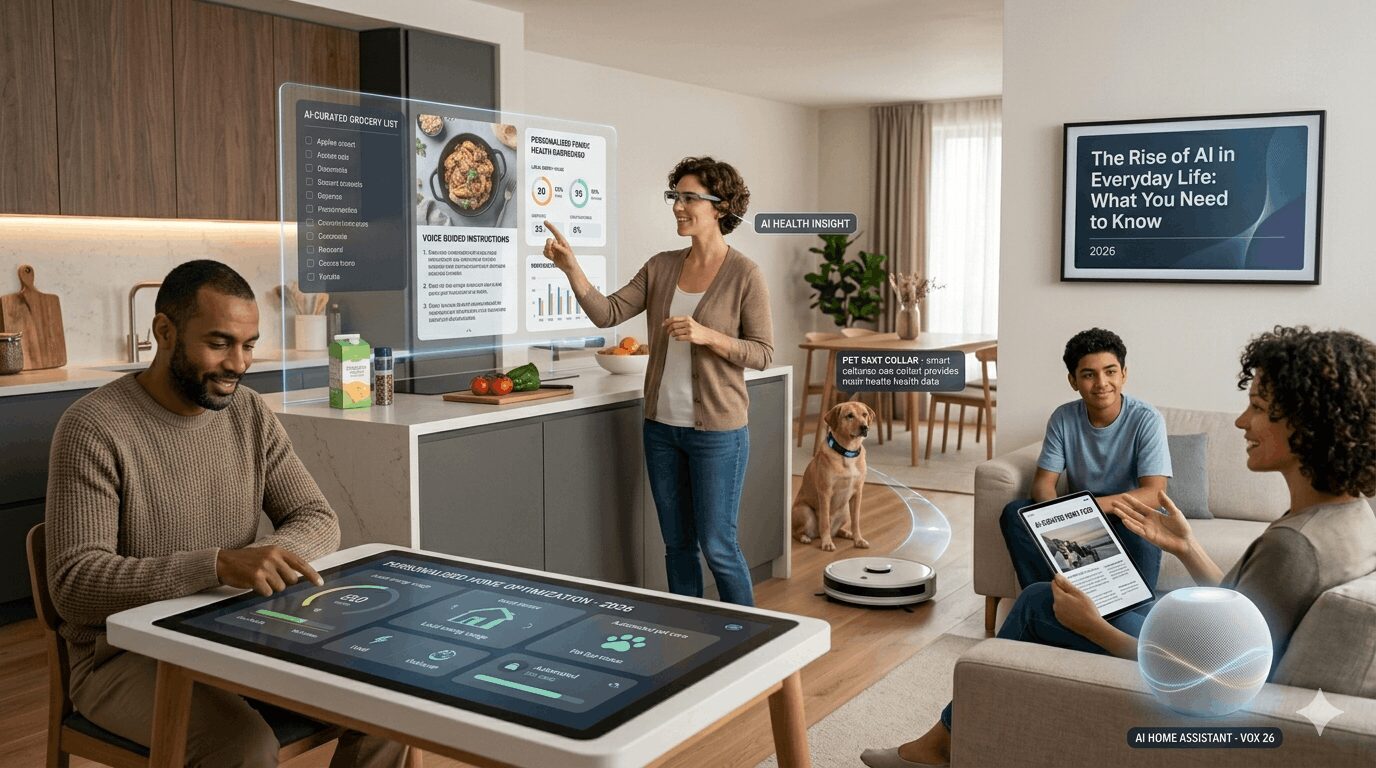
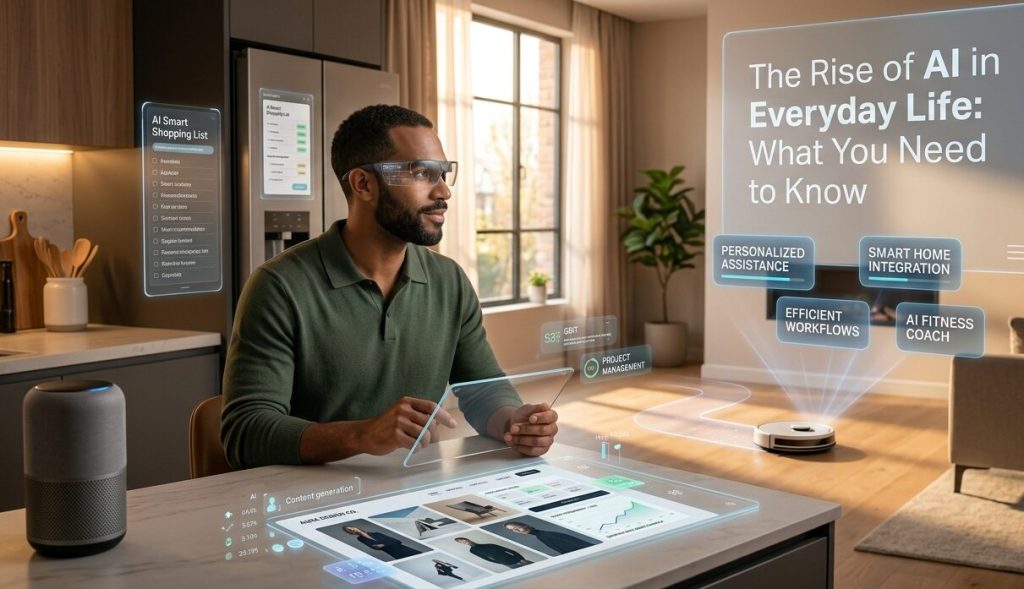
Our homes are becoming increasingly intelligent, thanks to the integration of AI. The convenience and efficiency brought by smart home devices showcase another significant facet of AI in daily life:
- Smart Thermostats (e.g., Nest): These devices learn your preferred temperatures and schedule, adjusting heating and cooling automatically to save energy and enhance comfort.
- Robot Vacuums (e.g., Roomba): Equipped with sensors and AI algorithms, they map your home, navigate obstacles, and clean efficiently without human intervention.
- Smart Security Systems: AI-powered cameras can differentiate between pets, packages, and intruders, sending intelligent alerts and reducing false alarms.
- Smart Speakers and Displays: Beyond voice commands, these devices can recognize individual voices, manage calendars, and even provide real-time information based on your habits.
The growing ecosystem of AI-driven home devices is transforming domestic life, making it more automated, secure, and energy-efficient. This widespread adoption underscores the practical benefits of AI in daily life.
Navigating the World: AI in Transportation and Logistics
The impact of AI in daily life extends far beyond our homes and pockets, significantly influencing how we move around and how goods are delivered:
- GPS Navigation and Traffic Prediction: Apps like Google Maps use AI to analyze real-time traffic data, predict congestion, and suggest the fastest routes, adapting instantly to changing conditions.
- Ride-Sharing Services: AI algorithms optimize matching drivers with riders, determine dynamic pricing, and plan efficient routes to minimize wait times and maximize efficiency.
- Autonomous Vehicles: While still evolving, self-driving cars heavily rely on AI for perception (understanding surroundings), prediction (forecasting other road users’ actions), and planning (navigating safely).
- Logistics and Supply Chain Optimization: AI helps companies manage inventory, optimize delivery routes, and predict demand, leading to faster and more cost-effective distribution of goods.
The advancements in AI are making transportation safer, more efficient, and more responsive to real-time conditions, fundamentally altering our experience of travel and commerce. This area represents a massive growth vector for AI in daily life.
Personalized Experiences: AI in Entertainment and E-commerce
Have you ever wondered how your streaming service knows exactly what show you’d like next, or how an online store suggests products you’re genuinely interested in? This is the magic of AI in daily life, creating highly personalized experiences:
- Streaming Services (Netflix, Spotify, YouTube): AI recommendation engines analyze your viewing/listening history, ratings, and even the behavior of similar users to suggest movies, music, and videos tailored to your tastes.
- E-commerce and Online Advertising: AI tracks your browsing history, purchases, and demographic data to present targeted advertisements and product recommendations, making your online shopping experience more relevant.
- Gaming: AI powers non-player characters (NPCs) in video games, creating more realistic and challenging opponents and environments. It also helps in matchmaking players of similar skill levels.
By understanding individual preferences, AI enhances user engagement and satisfaction, making digital interactions feel more intuitive and tailored. The pervasive nature of this personalization highlights the deep integration of AI in daily life.
Beyond Convenience: AI in Healthcare and Education
While often less visible to the average consumer, AI in daily life is making profound impacts in critical sectors like healthcare and education:
- Healthcare Diagnostics: AI algorithms can analyze medical images (X-rays, MRIs) with remarkable accuracy, assisting doctors in detecting diseases like cancer earlier and more reliably.
- Drug Discovery and Development: AI speeds up the identification of potential drug candidates, analyzes vast datasets of biological information, and predicts molecular interactions, significantly reducing the time and cost of bringing new medicines to market.
- Personalized Learning Platforms: AI-powered educational tools adapt to individual student learning styles and paces, providing customized content, feedback, and assessments to enhance educational outcomes.
- Virtual Health Assistants: AI chatbots and virtual assistants can answer patient questions, schedule appointments, and provide initial symptom assessments, easing the burden on healthcare professionals.
These applications demonstrate AI’s potential to solve complex societal problems and improve quality of life on a large scale, proving that AI in daily life extends far beyond simple conveniences.
The Workforce Transformation: AI at Work
The influence of AI in daily life also extends significantly into the professional realm, reshaping industries and job functions:
- Automation of Repetitive Tasks: AI and robotics automate routine tasks in manufacturing, data entry, and customer service, freeing human workers for more complex and creative roles.
- Data Analysis and Business Intelligence: AI tools can process and analyze enormous datasets, extracting insights that help businesses make better strategic decisions, identify market trends, and optimize operations.
- Customer Service Bots and Chatbots: Many companies use AI-powered chatbots to handle routine customer inquiries 24/7, providing instant support and reducing the workload on human agents.
- Recruitment and HR: AI assists in sifting through resumes, identifying suitable candidates, and even predicting job performance, streamlining the hiring process.
While often raising concerns about job displacement, AI also creates new roles and enhances productivity, allowing workforces to achieve more with greater efficiency. The transformation driven by AI in daily life in the workplace is undeniable.
Navigating the Future: Benefits and Challenges of AI’s Rise
The pervasive nature of AI in daily life brings with it a host of benefits, but also significant challenges that demand careful consideration.
Key Benefits:
- Enhanced Efficiency and Productivity: AI automates tasks, optimizes processes, and helps us make faster, more informed decisions, leading to overall greater productivity.
- Personalization: From entertainment to healthcare, AI tailors experiences to individual needs and preferences, making services more relevant and effective.
- Innovation and Problem Solving: AI is a powerful tool for scientific discovery, medical breakthroughs, and tackling complex global challenges like climate change.
- Accessibility: AI-powered tools like voice-to-text, translation services, and assistive technologies make information and services more accessible to people with disabilities.
- Improved Safety and Security: AI enhances everything from cybersecurity defenses to predictive maintenance in critical infrastructure and advanced driver-assistance systems in cars.
Significant Challenges:
- Privacy Concerns: The vast amounts of data AI systems collect and process raise questions about data privacy, security, and potential misuse.
- Ethical Dilemmas: As AI becomes more autonomous, ethical questions arise regarding accountability, bias in algorithms (which can perpetuate societal prejudices), and the potential for misuse.
- Job Displacement: While AI creates new jobs, it also automates existing ones, leading to concerns about unemployment and the need for workforce reskilling.
- Bias and Fairness: AI systems learn from data, and if that data reflects existing societal biases, the AI can perpetuate or even amplify those biases, leading to unfair outcomes.
- Security Risks: AI systems themselves can be vulnerable to hacking or manipulation, posing new security threats.
- Lack of Transparency (Black Box Problem): Understanding how some complex AI models arrive at their decisions can be difficult, making it hard to trust or debug them.
Addressing these challenges responsibly is crucial for ensuring that the continued integration of AI in daily life serves humanity’s best interests.
Embracing the AI Revolution Responsibly
As AI in daily life continues its rapid ascent, it’s essential for individuals and societies to adapt. This involves:
- Digital Literacy: Understanding how AI works and its implications is becoming a fundamental skill.
- Critical Thinking: Evaluating information and recommendations from AI systems with a discerning eye.
- Advocacy for Ethical AI: Supporting policies and technologies that prioritize fairness, transparency, and accountability in AI development.
- Lifelong Learning: Adapting to new job roles and acquiring new skills as the job market evolves with AI.
Conclusion
The rise of AI in daily life is not a futuristic event; it is our present reality. From the smartphones in our hands to the complex systems running our cities, AI is an omnipresent force, continuously evolving and redefining our interactions with technology and the world around us. While it offers unparalleled opportunities for progress, efficiency, and personalization, it also demands our thoughtful engagement with its ethical, privacy, and societal implications. Understanding AI in daily life is no longer optional; it’s a prerequisite for navigating and shaping the innovative, yet complex, future that is already here.
Frequently Asked Questions (FAQs)
Q1: Is AI in daily life making us lazy?
A: Not necessarily lazy, but it is certainly changing how we perform tasks. AI automates repetitive or mundane activities, freeing up human time and mental energy for more creative, complex, or strategic endeavors. The goal is to augment human capabilities, not replace them entirely, though balancing convenience with skill development is important.
Q2: How can I protect my privacy with so much AI in daily life?
A: Be mindful of the data you share with AI-powered apps and devices. Read privacy policies, review app permissions, use strong passwords, and consider adjusting privacy settings on your devices. Limiting unnecessary data collection where possible can help. Governments are also implementing regulations like GDPR to enhance user privacy.
Q3: Will AI take all our jobs?
A: While AI will undoubtedly automate certain job functions and displace some roles, it also creates new jobs, particularly in AI development, maintenance, and oversight. The nature of work is evolving, requiring individuals to adapt, upskill, and focus on uniquely human skills like creativity, critical thinking, and emotional intelligence that AI currently cannot replicate.
Q4: Is AI in daily life biased?
A: Yes, AI systems can exhibit bias. This isn’t because the AI itself is inherently discriminatory, but because it learns from the data it’s fed. If the training data reflects existing societal biases, or is incomplete/unbalanced, the AI will learn and perpetuate those biases in its decisions. Addressing this requires diverse and carefully curated datasets, as well as ethical AI development practices.
Q5: How can I get more involved with understanding AI?
A: There are many resources available! Start by reading reputable articles and books on AI for beginners. Take online courses (e.g., Coursera, edX, Google AI) that cover AI fundamentals. Experiment with AI tools, such as generative AI platforms or smart home devices, to understand their capabilities and limitations firsthand. Engaging with tech communities and discussions can also be very insightful for comprehending the nuances of AI in daily life.